American Football Player T Shirt: Embroidery Design Review
First Look at the Artwork Personality
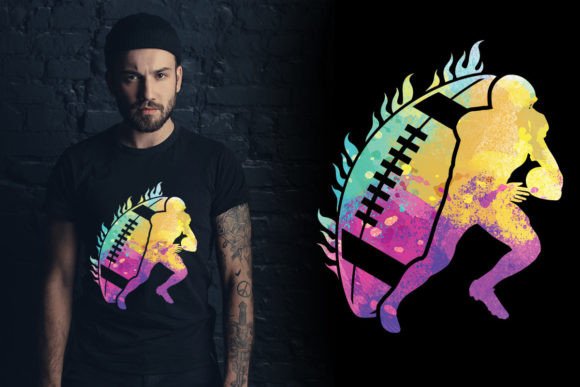
When I opened the American Football Player T Shirt graphic, the first thing that struck me was how much motion the figure carries. The pose feels active, not stiff. Too many sport-themed designs flatten the athlete into a generic silhouette, but this one holds a sense of forward momentum. The shoulders angle slightly, the helmet detail reads clearly, and the overall composition fills the design space without feeling cramped. As someone who has digitized and stitched dozens of sport graphics over the years, I immediately started mentally testing it on different products. A graphic like this needs to land emotionally with the person wearing it, whether they are a proud parent, a weekend athlete, or a fan who lives for game day.
The theme is unmistakably football. There is no confusion about the sport, no awkward hybrid pose that could belong to three different activities. That clarity makes the American Football Player T Shirt design feel confident. For an embroiderer or a small business owner, confidence in the artwork translates directly into buyer trust. If a customer glances at a finished tote bag or a sweatshirt and immediately understands the design, you are already halfway to a sale.
Where This Design Naturally Belongs
I keep a mental list of product categories every time I test a new graphic, and this one quickly found its home. The obvious route is custom apparel. A heavyweight cotton t-shirt with this design stitched across the chest would look right at home at a Friday night game or a weekend tailgate. But the more I studied the shapes and the density of the filled areas, the more I thought about products beyond basic tees.
Sweatshirt embroidery is a strong candidate here. The larger surface area of a crewneck or a hoodie gives the design room to breathe, and the slightly textured fleece background creates a nice contrast against smooth satin stitches. I also pictured this on a canvas tote bag, something sturdy enough to handle the stitch count and practical enough that a customer would carry it to the gym or the stadium. A structured cap with the design centered on the front panel could work beautifully too, though I would scale it carefully given the curvature of the crown.
For Etsy sellers and craft fair vendors, the American Football Player T Shirt design opens doors to a very specific buyer: the football family. Parents shopping for personalized gifts during playoff season, grandparents looking for a unique birthday present, or coaches ordering small-batch team appreciation items. The design fits cleanly into that niche without feeling mass-produced.
A Real Project Scenario That Tested My Thinking
Last month, a client asked me to create a custom embroidered tote bag for her son's senior night. She wanted something athletic, personal, and subtle enough that he would actually use it after the season ended. I pulled up the American Football Player T Shirt graphic and ran it through my mental checklist. The pose looked dynamic without screaming youth league. The detail level suggested it would digitize with enough clarity to hold up on medium-weight canvas. I imagined the finished product in navy thread on a natural cotton tote, and the picture worked.
I did what I always recommend: I tested a scaled version on scrap fabric first. The helmet details stitched out cleaner than I expected. The facemask area, which can easily become a muddy blob in small embroidery, held its shape because the negative space between the lines was generous enough. That is the kind of practical detail that matters when you are preparing a product someone will wrap as a gift or display at a boutique table. A design can look flawless on a screen and fall apart under the needle if the tiny gaps close up. This one gave me room to work with.
My client loved the tote. Her son carried it to school the next week. That small real-world win says more than any product description ever could. The American Football Player T Shirt design translated from a digital file into a finished handmade product that actually got used, and that is the metric I care about most.
Stitching Behavior and Fabric Compatibility
If you are planning to use this design on stretchy fabrics, pause and test carefully. Athletic tees, thin jersey, or performance blends can shift under dense fill stitches. I would recommend a firm cutaway stabilizer on anything with give, and if you are stitching on a toddler t-shirt or a baby onesie, scale the design down thoughtfully. The smaller you go, the more those tight interior details risk closing in on themselves. I would not push this below a four-inch width without simplifying the stitch structure.
Textured fabrics present another consideration. On a terry cloth towel or a waffle-weave kitchen textile, the edges of the design might lose crispness. That is not a flaw in the graphic itself; it is simply the nature of embroidery on looped or uneven surfaces. If your heart is set on a football-themed tea towel or a decorative pillow cover, choose a smooth, tightly woven base and use a topper to keep the stitches sitting cleanly on top.
Dark fabrics deserve extra attention too. The contrast between thread and background can make or break the final look. A white or light gray sweatshirt will show every stitch clearly, while a deep charcoal or black garment might swallow darker thread colors unless you adjust the palette. I often test my thread choices on a black fabric swatch before committing to a full project, and I suggest the same approach here.
Visual Appeal from a Maker's Perspective
What I appreciate about the American Football Player T Shirt design is that it walks a smart line between bold and wearable. Some sport graphics go too aggressive, with oversized proportions that dominate a garment awkwardly. Others shrink into timid little emblems that lose all personality. This one sits in a comfortable middle zone. The figure has presence but does not overwhelm a standard adult tee or a medium tote panel. That balance gives you flexibility as a maker. You can position it as the hero element on a product, or you can pair it with a name, a number, or a short phrase without the layout feeling cluttered.
From a branding standpoint, consistency matters. If you run a small craft business or an Etsy shop, the designs you choose shape how customers perceive your style. A clean, well-proportioned athletic graphic signals that you care about quality, not just about filling a listing slot. Buyers notice when the embroidered football player on a onesie looks sharp rather than lumpy. They leave better reviews. They come back for the basketball version or the baseball version next season. The American Football Player T Shirt design helps build that kind of repeat trust.
Product Versatility Beyond Apparel
I have learned over the years that the best embroidery designs stretch further than you initially expect. While t-shirts and sweatshirts are the obvious starting points, this graphic can find its way onto a surprising range of products. A fabric banner for a bedroom or a game room adds a decorative touch that feels personal without being childish. A set of coordinating pillow covers for a sports-themed nursery or a young fan's reading nook brings a cohesive look to the space.
Embroidered patches are another avenue worth exploring. If you stitch this design onto a separate piece of felt or twill and finish the edges, you create a standalone product that customers can sew onto jackets, backpacks, or team bags. Patches sell well at craft fairs and in online shops because they offer a low-commitment way for buyers to customize their belongings. The American Football Player T Shirt graphic, properly scaled and digitized, would make a handsome patch with strong visual appeal.
Gift products also come to mind. A kitchen towel embroidered with this design becomes a playful holiday present for the football fan who already owns every jersey. A personalized apron with the player graphic and a name underneath turns a practical item into something memorable. These are the kind of niche applications that help small shops stand out in a crowded market.
What to Check Before You Stitch
No design review is complete without a practical checklist, and I always run through the same points before I commit to a new graphic for client work or shop inventory. Start by examining the small details in the artwork. The helmet, the shoulder contours, and any interior cutouts need enough clearance to stitch cleanly at your target size. If the original graphic is dense or highly detailed, talk to your digitizer about adjusting the stitch types. Satin stitch works beautifully for outlines and medium-width sections, while fill stitch handles larger areas smoothly. Running stitch accents can add texture without adding bulk.
Thread color selection deserves real thought. I tend to test the design in two or three colorways before listing a product. A monochrome version in navy, white, or burgundy can shift the entire mood of the finished piece. The design itself stays the same, but the presentation changes. A gold thread on a forest green tote feels collegiate. A soft gray on a heather sweatshirt reads more subtle and modern. Your customer base will tell you which direction works best.
Stabilizer choice matters as much as thread. On stable wovens like canvas or denim, a medium cutaway gives clean results without adding stiffness. On knits, go firmer. On caps, use a tear-away and hoop carefully around the curved surface. None of this is unique to the American Football Player T Shirt design specifically, but it is worth repeating because skipping these steps ruins more projects than bad artwork ever does.
Commercial Use and Selling Finished Products
For creative entrepreneurs and digital product sellers, licensing is always a practical concern. Before you stitch this design onto products for sale, confirm that the usage terms allow commercial applications. The product description states the graphic can be used in printable products like t-shirts, stickers, posters, banners, and gift cards, but the exact scope for embroidered physical products and digital embroidery file resale should be verified directly. I always recommend keeping clear records of your license terms. It protects your business and gives you peace of mind when you scale up production.
If you sell embroidery files rather than finished goods, test stitch the design thoroughly and provide clear photos of the stitched result, not just the mockup. Buyers in the embroidery community value transparency. They want to see how the satin stitches lay, whether the small gaps stay open, and how the design looks on actual fabric. A well-documented stitch-out builds credibility faster than any sales copy.
Printables and Beyond the Embroidery Hoop
Although I primarily evaluate designs through an embroidery lens, I have to acknowledge that the American Football Player T Shirt graphic also serves the printable product market well. Sublimation, screen printing, and heat transfer applications all benefit from the same clarity and motion that make the design stitch nicely. If your shop spans both embroidery and print-on-demand, this graphic can unify your product line across multiple categories. A customer might discover your brand through a printed poster and later return for an embroidered sweatshirt featuring the same artwork. That kind of cross-category consistency strengthens your shop identity.
Printable mockups also play a role in how you present the finished look. A crisp digital preview on a t-shirt template helps customers visualize the product before they buy. Just remember that the stitched version will have its own texture and dimension that a flat mockup cannot fully capture. I find that offering both a clean mockup image and a close-up photo of actual embroidery helps manage expectations and reduces returns.
Final Practical Thoughts
After spending real time with this design, evaluating it across multiple product types and imagining how it performs under the needle, I can say it earns its place in a serious maker's library. The American Football Player T Shirt graphic brings enough detail to feel intentional, enough simplicity to stitch reliably, and enough thematic clarity to connect with the right buyer. Whether you run a small Etsy shop, prepare custom gifts for local clients, or build boutique merchandise for seasonal markets, this design gives you a solid starting point.
Test it on scrap fabric. Try it on a sweatshirt and a tote bag and a structured cap. Check the thread contrast on light and dark backgrounds. Confirm your hoop size accommodates the scaled dimensions you need. Review the license terms for commercial use. Do all of those things, and you will have a finished product that looks professional, feels personal, and stands up to the wear and washing that real life demands.