Golf Ball T-shirt Design 21: A Designer's Practical Review
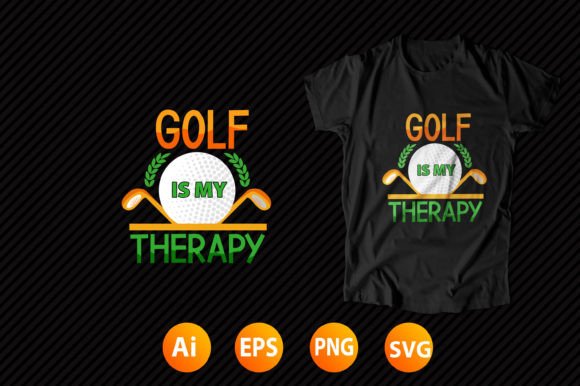
When a new embroidery design lands in my library, I don’t just look at the preview. I think about the fabric it’ll live on, the hands that will stitch it, and the person who will ultimately wear or use it. Today, I’m thinking through Golf Ball T-shirt Design 21, a graphic that confidently declares “golf is my therapy.” It’s a design meant for t-shirts, but as any seasoned embroidery designer knows, a good graphic often finds its way onto far more than just a tee. Let’s see if this one has the versatility and character for real project use.
The First Impression: Clean, Bold, and Conversational
Opening the file, the mood is immediately clear: confident and playful. The design isn’t overly fussy; it’s a clean, bold statement piece. The central golf ball icon provides a strong focal point, and the typography is straightforward, letting the message carry the weight. This isn’t a subtle, decorative motif—it’s a design with personality. It feels like it belongs on something worn or used by someone who loves the game, a badge of identity rather than just a pattern. For crafters and small business owners, that’s a valuable starting point: a design that sparks a connection.
Where This Design Naturally Belongs
While labeled a T-shirt Design, this graphic’s clean vector shapes make it a candidate for a wide range of embroidery projects. I envision it perfectly at home on a custom embroidered sweatshirt or hoodie, where the statement can be larger and more prominent. It would make a fantastic, personalized gift as a embroidered patch sewn onto a golfer’s favorite tote bag or cap. I can also see it working well on aprons, pillow covers for a sports-themed room, or even kitchen towels as a fun gift for the golf enthusiast. The “therapy” angle adds a layer of warmth, making it suitable for holiday gifts or personalized products from a small shop.
Performance in Real-Life Embroidery Situations
Now, let’s get practical. How will this machine embroidery design actually perform when the needle hits the fabric?
The bold, re-sizable shapes are promising. The golf ball itself, with its likely dimple pattern, will need attention. If those details are rendered with small satin stitch or fill stitch areas, they’ll require a stable fabric and good stabilizer to remain crisp, especially on stretchy fabrics like t-shirts. The lettering “golf is my therapy” is the heart of the design. Its clarity after stitching is paramount. On lighter fabrics, with a strong thread color contrast, it should pop beautifully. On dark fabric, like a black sweatshirt, you’ll need to plan your thread palette carefully—a white or bright fill for the text and ball will be essential for readability and visual appeal.
For a project like a baby embroidery item or a delicate tea towel, I’d scale the design down carefully. The density of the stitches in the filled areas needs to be appropriate for thinner fabrics to avoid puckering. Conversely, for a bold statement on a tote bag design or blanket, scaling up could make a powerful, high-value handmade product.
A Real Scenario: The Boutique Gift Tote
Imagine you’re an Etsy seller preparing a custom order for a client who wants a unique gift for her golf-loving husband. She’s chosen a sturdy canvas tote bag. You’ve selected Golf Ball T-shirt Design 21. Here’s where the design judgment comes in. You’ll test it on scrap canvas first to check stitch density and how the small text details behave. You’ll confirm your hoop size can accommodate the design at the scale you want. The clean graphic will look professional and gift-ready, elevating the perceived value of your craft business item. The message is personal and engaging, likely creating a product that feels thoughtful and specific, not generic.
Points for Careful Consideration
No design is perfect for every single application, and a professional review must note where to proceed with caution. The areas of potential challenge here are typical for bold graphics with text.
- Small Hoop Sizes & Tiny Lettering: If you need to shrink this design significantly for a baby clothes item or a cap with a curved surface, inspect the small details in the lettering. They must remain clear and not bunch up.
- Textured or Thin Fabrics: On highly textured fabrics or very thin materials, the filled areas of the ball and text might not lay as smoothly. Proper stabilizer choice is critical.
- Commercial Embroidery Projects: If you’re using this for commercial embroidery or selling the finished product in volume, always, always confirm the licensing terms of the digital embroidery file before proceeding. The product description mentions vector shapes, but the specific license for selling embroidered items needs to be clear.
- Products for Frequent Washing: For items like apparel or kitchen towels that will be laundered often, a robust stitch construction is key. Testing on scrap fabric and washing it repeatedly will give you confidence in the design’s durability.
How This Design Impacts Your Craft and Business
Beyond the stitches, a design like this influences your work’s perceived value. Golf Ball T-shirt Design 21 offers strong brand consistency if you’re a maker focusing on sports or lifestyle themes. Its clean, modern look enhances professionalism in your Etsy listings or printable mockups. For personalized gifts, it hits an emotional note—it’s more than a logo; it’s a shared sentiment. That boosts giftability and buyer engagement. For a small shop product, it’s a recognizable, niche design that can attract a specific customer, building customer trust in your curation.
Practical Notes for the Embroidery Designer
Before you load this file and start your next embroidery project, here’s my checklist of advice, drawn from experience.
- Do not skip the scrap fabric test. Check thread color contrast on both light and dark backgrounds.
- Review the stitch density in your software preview. Are the fills overly dense for your target fabric?
- For designs with text, always run a black and white mockup to ensure the shapes are clear without color.
- If you plan to sell items made with this design, verify the licensing permissions explicitly.
- Consider the end product. A dense design on a stretchy tee might need a cut-away stabilizer; on a tote bag, a tear-away might suffice.
- Remember, a good design asset is one you can use confidently. This design’s bold, simple shapes suggest confidence, but only your test stitches will prove it.
In summary, Golf Ball T-shirt Design 21 presents itself as a versatile, mood-setting graphic with clear commercial and gift appeal. Its success in your hands, however, will depend on your thoughtful application of embroidery fundamentals: testing, stabilizing, and matching the design to the right fabric and project. For the right item—a personalized sweatshirt, a statement tote, a boutique pillow—it could stitch up into a truly engaging finished product.