I’m Wired Like That T-Shirt Design Reviewed for Embroidery
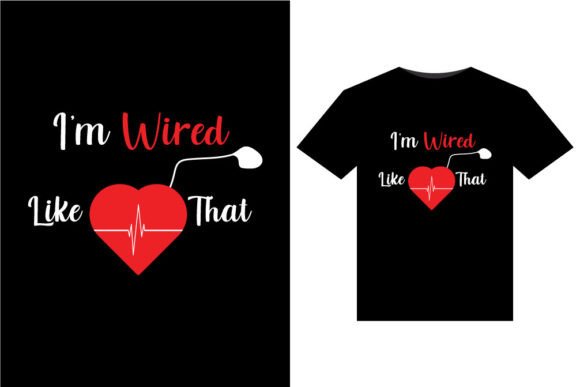
The moment I opened I m Wired Like That T-Shirts Design, I felt a quiet kind of recognition. This isn't a loud, overly sentimental graphic. It carries the weight of a personal truth—something a lot of people living with heart conditions, or supporting someone who does, will instantly connect with. The phrase itself has that perfect mix of humor and vulnerability. From a designer's perspective, the typographic personality and the illustrative elements set a clear tone: wearable, shareable, and emotionally grounded without being preachy.
What interested me immediately was how this design could move from a simple T-Shirt Designs asset into a real embroidery project. Since the files are described as 100% vector and 100% resizable, the foundation for a clean digitized embroidery file is already there. Most vector artwork needs a fair amount of tweaking before it stitches well, but a clean source file is half the battle won. For embroidery designers who convert Graphics into stitch-ready formats, that clarity matters immensely.
First Impression and Emotional Pull
The mood here balances casual confidence with an undercurrent of advocacy. The phrase "I'm Wired Like That" reads like an inside joke that also happens to be a statement piece. For heart disease awareness, that tonal balance is tricky to pull off. Too somber, and nobody wears it casually. Too flippant, and it loses meaning. This design lands right in the middle, which makes it surprisingly versatile for handmade products.
Visually, I kept imagining how the lettering would translate into satin stitch or a well-adjusted fill stitch. The shape of the overall composition matters a lot here. If the illustrations stay bold and the outlines remain distinct, the stitched version will keep its personality even on textured fabric. I would strongly recommend testing the vector file for stroke thickness before digitizing—anything below one millimeter in the original art can turn into a thread-thin mess under a needle.
A Real Project Scenario That Makes Sense
Let me walk you through a recent order I was planning. A local cardiology support group wanted a small batch of embroidered zip-up hoodies for their annual awareness walk. They needed something that felt personal, not mass-produced. Immediately, I thought of I m Wired Like That T-Shirts Design because the message works for survivors, caregivers, and medical staff alike.
Hoodies present a specific challenge. The chest embroidery area sits right where the zipper teeth and fleece backing can distort stitching if the stabilizer isn't chosen carefully. For this design, I would hoop a cutaway stabilizer, float a topper on the fleece, and run a test stitch on a scrap panel first. The vector-based artwork means I can scale the design down to fit a left-chest placement without losing line quality—something I always confirm before committing to a full production run.
Client reaction matters enormously in scenarios like this. When someone opens that hoodie and sees the embroidered phrase sitting clean and slightly raised on the fabric, it feels substantial. It signals that this isn't a cheap heat-transfer that will crack after five washes. For heart health merchandise especially, customers want permanence. They want the message to last. Embroidery inherently carries that promise, and a well-digitized version of this design would deliver it beautifully.
Stitching Behavior and Technical Considerations
Every embroidery designer knows the gap between a pretty screen graphic and a sewable file can be enormous. With I m Wired Like That T-Shirts Design, the vector format gives us control. I would begin by checking how the illustrations interact with the text. If the graphic elements wrap around or sit beside the lettering, the stitch density in those transition zones needs careful attention. Too dense, and the fabric puckers. Too sparse, and the coverage looks amateurish.
Thread color contrast is something I think about from the very first glance. On a dark hoodie or a deep burgundy sweatshirt, lighter thread tones would pop. On a pale garment, a charcoal or deep navy embroidery thread would let the design breathe without shouting. I always advise crafters and small business owners to test the design in black-and-white mockups first. If the design holds its visual weight without color, it will stitch cleanly across different fabric backgrounds.
Here is what I examine before digitizing any T-Shirt Designs asset for embroidery use:
- Line spacing inside the lettering—tight loops can snag on textured fabrics.
- Minimum detail size—no element thinner than 0.8mm for reliable stitching on cotton or fleece.
- Overall shape footprint—confirm the design fits standard hoop sizes like 4x4, 5x7, or 6x10 inches.
- Color separation—fewer thread changes mean faster production and lower cost for bulk orders.
- Edge definition—crisp outlines stitch cleaner as running stitch borders compared to loose fill edges.
Where This Design Shines Brightest
I see I m Wired Like That T-Shirts Design fitting into several product categories with real commercial potential. The awareness angle makes it a strong candidate for:
- Custom apparel like hoodies, sweatshirts, and unisex t-shirts for fundraisers and community events.
- Embroidered tote bags—the flat weave of canvas holds detail stitch beautifully and appeals to Etsy shoppers looking for meaningful everyday accessories.
- Patches—digitize this with a merrowed edge border and you have a sew-on or iron-on patch that boutique customers love.
- Pillow covers and tea towels—home decor items with heartfelt messages sell consistently in small shops and craft fairs.
- Nursery or caregiver gifts—a soft baby blanket with this embroidery tucked into the corner ribbon area speaks volumes for families touched by congenital heart conditions.
What makes this design commercially smart is its open-ended appeal. A person buying a heart disease awareness sweatshirt isn't just buying clothing. They are buying recognition, solidarity, and a conversation starter. For an Etsy seller or a craft business owner, that emotional layer directly boosts perceived value. You are not selling thread on fabric. You are selling connection.
Where Caution Is Absolutely Necessary
Not every product category welcomes detailed embroidery equally. After years of testing, I have learned to be cautious with designs like this on:
- Thin, stretchy fabrics—think tissue-weight tees or rayon blends. The stitch tension can warp the fabric around the lettering unless you use a heavy fusible stabilizer and a water-soluble topper.
- Curved surfaces—caps and structured hats demand a center-aligned, compact version of the design. The original vector may need significant resizing and simplification to stitch cleanly on front panels without distorting at the seams.
- Dark fabrics with light thread—any small gaps in fill stitch become glaringly obvious. I would run a test on black cotton with cream thread and adjust the underlay stitching until the coverage is solid.
- Items washed frequently—kitchen towels and baby bibs are tempting, but the stitch integrity depends on dense, locked thread paths. If the design digitization skips proper tack-down stitches, the edges will fray within months.
I also want to flag something that often gets overlooked: tiny decorative accents inside the illustration. If the original Graphics file includes delicate dots or thin swoops that look charming on screen, they might stitch as messy blobs on fabric. My rule is to simplify before digitizing. The vector source file lets me do that without losing the design's identity, which is a genuine advantage here.
Product Value and Customer Trust
When someone receives a handmade embroidered item featuring I m Wired Like That T-Shirts Design, the texture of the stitches immediately communicates effort. This is not a print-on-demand drop-ship product with unknown longevity. The dimensional quality of embroidery, especially when the satin stitch creates a subtle sheen on the lettering, builds customer trust faster than any product description ever could.
For boutique branding, consistency matters. If your shop sells awareness merchandise, your buyers expect the stitching to look identical across color variants and fabric types. That means you need to digitize from the same cleaned vector source every time. I appreciate that this design's resizable nature lets me keep proportions locked while adjusting for different hoop sizes, rather than redrawing from scratch for each product variation.
Giftability also rises significantly with embroidery. A personalized zipper pouch with this phrase stitched on the front panel becomes a meaningful present for someone post-surgery or during cardiac rehab. It feels considered. The phrase carries warmth, and the stitched execution adds permanence that printed graphics simply cannot match.
Practical Notes for Embroidery-Based Businesses
From a production standpoint, here is my honest checklist for anyone planning to use I m Wired Like That T-Shirts Design as a digital embroidery file source:
- Confirm licensing terms before selling finished items. The product description positions this as a T-Shirt Designs asset for websites or stores, which suggests commercial use might be allowed, but I never assume. Check the exact license. Some Graphics are sold for personal use only, and that distinction protects your business from legal trouble.
- Test digitization on scrap fabric. Always. Run the stitch-out on a fabric that matches your final product weight. Check for thread breaks, density issues, and registration accuracy. One test stitch saves ten customer complaints.
- Review the design at actual size. Resize the vector to your intended stitch dimensions and print it on paper. Lay that paper on the garment. Sometimes a design that looks balanced on screen feels awkwardly sized on a wearable product.
- Choose thread colors intentionally. Avoid matching the thread exactly to the fabric. Slight contrast helps the design stand out. For heart disease awareness, classic combinations like red thread on grey fabric or white thread on crimson read clearly.
- Document your settings. Once you find the right digitizing parameters, save them. Future re-orders from the same client or restocks of your Etsy listing will go smoother with repeatable results.
The Broader Appeal for Makers and Small Shops
I m Wired Like That T-Shirts Design belongs to a category of design that sells not because it follows trends, but because it speaks to lived experience. For creative entrepreneurs and handmade shop owners, that is gold. Trendy phrases fade. Heartfelt statements endure.
I can picture this stitched onto a wheat-colored linen apron for a home cook managing dietary changes due to heart health. I can see it on a soft grey sweatshirt in a boutique window display for Heart Month. I can imagine it as a tiny embroidered accent on a baby onesie for a NICU graduate photo shoot. In each case, the embroidery becomes part of the story the product tells. The vector source file gives me the flexibility to scale, crop, or adapt the design for each context without starting over.
The awareness angle also opens doors for partnerships with nonprofits, hospital gift shops, and local support groups. Those buyers need consistent, quality merchandise that respects the sensitivity of the topic. A cleanly embroidered design on a well-made garment meets that need far better than a rushed screen print ever could.
For anyone building a craft business around meaningful, message-driven products, this design earns its place in the digital library. It bridges personal expression and commercial reliability—something every experienced embroidery designer looks for before pressing start on the machine.